Buying a Ferrari in Chicago: Dealer Allocation, Winter Storage and the Illinois and Cook County Tax Math
Chicago
has one of the highest combined sales-tax rates of any major American city. The Illinois Department of Revenue's published rate tables put it at 10.25% for a city address.On a $400,000 Ferrari, that rate alone adds a tax line of roughly $41,000. That comes before registration, documentary fees or a single night of winter storage.
That said, tax is only one of three things that set what Ferrari ownership really costs in Chicagoland. Allocation decides which car you can buy at all, and a six-month storage season decides what the car costs while it waits for spring.
How Ferrari Allocation Works Through Chicago-Area Dealers
Ferrari sells new cars through authorized dealers, and the factory gives each dealer an allocation of series-production and limited models. The dealer, not the factory, decides which client gets a given build slot, so your relationship with one specific store matters more than anything else in the process.
Keep in mind that the authorized dealers serving Chicagoland have historically been in the suburbs rather than inside city limits. Confirm the current list on Ferrari's official dealer locator before you plan a visit, because dealer ownership and representation change over time.
Series-production cars are generally the easier conversation, though wait times vary by model and by store. Special Series cars, Icona models and limited runs are a different matter, and the Ferrari Special Series lineup shows how narrow that window can be.
Those cars are typically offered first to clients with an established purchase history. Our allocation reality analysis looks at how far that reputation actually reaches and where the editorial myth runs ahead of dealer practice.
Building A Dealer Relationship From A Standing Start
For a first-time Ferrari client, the path to a meaningful allocation tends to follow a consistent sequence. The signals dealers weigh include but are not limited to:
- A series-production purchase. The first car is usually a current model ordered or bought from stock at the store where you intend to stay. It establishes you as a client rather than a prospect.
- Factory service at the same store. Service history at the selling dealer shows long-term intent, and our Ferrari service costs by model breakdown helps you budget for it.
- Respecting resale terms. Dealers track where their limited cars end up. Reviewing anti-flip agreements before you place a deposit protects both the car and your standing.
- Clear communication on specification. A client who orders with resale and usability in mind, then keeps the car, is easier to allocate to than one who changes the build late.
All of these signals add up over time. A client who buys, services and keeps cars at one store is generally better placed than a buyer who shops several dealers for the lowest price on each car.
The Illinois, Cook County And Chicago Tax Stack
Illinois taxes a dealer vehicle sale under the Retailers' Occupation Tax, and home-rule and transit taxes are added on top depending on location. For a Chicago address, the layers stack as follows:
| Tax layer | Rate | Tax on $250,000 | Tax on $400,000 | | --- | --- | --- | --- | | Illinois state | 6.25% | $15,625 | $25,000 | | City of Chicago home rule | 1.25% | $3,125 | $5,000 | | Cook County home rule | 1.75% | $4,375 | $7,000 | | Regional Transportation Authority | 1.00% | $2,500 | $4,000 | | Combined Chicago rate | 10.25% | $25,625 | $41,000 |
Rates are the Illinois Department of Revenue's published rates for Chicago addresses, and the dollar figures are worked examples, not a quote. Rates change by ordinance, so check the combined rate with IDOR's tax rate lookup on the date of the transaction.
On top of sales tax, expect title and registration charges from the Illinois Secretary of State plus a dealer documentary fee. Illinois caps documentary fees and adjusts the cap every year, so confirm the current figure rather than accepting a round number on the buyer's order.
Trade-Ins, Private Sales And The Suburban Question
Illinois caps the trade-in credit at $10,000 of trade value. The cap came in with the state's Rebuild Illinois legislation and has applied since January 1, 2020.
If you are trading a car worth far more than that, the trade still makes the deal simpler, but the tax saving stops growing past the cap. At Chicago's rate, the saving tops out near $1,025.
Private-party purchases follow a different schedule. Illinois reports those sales on Form RUT-50, which charges a flat amount by price band rather than the percentage a dealer collects.
On a used Ferrari, that difference can be large, though the whole inspection burden shifts to the buyer. Our pre-purchase inspection guide covers what an independent PPI should document before money changes hands.
Be aware that Chicago and Cook County each charge a use tax on titled vehicles that residents buy outside their borders. As a result, a city resident who buys from a suburban dealer in a lower-rate county does not automatically keep the full rate difference.
Those use taxes may also reach private-party purchases. Before you plan a deal around where you buy, confirm current rates and exemptions with the City of Chicago Department of Finance and the Cook County Department of Revenue.
What A Six-Month Storage Season Costs
Road salt and repeated freezing and thawing push most Chicago Ferrari owners toward a November-to-April storage window. The figures below are estimated ranges for budgeting, not quotes from any facility.
| Storage item | Estimated range | Notes | | --- | --- | --- | | Climate-controlled storage, six months | $1,800–$4,200 (estimated) | Assumes $300–$700 per month; secured, heated facilities sit at the higher end | | Enclosed transport, round trip | $300–$800 (estimated) | Local pickup in fall and return in spring | | Spring detail and recommissioning check | $250–$750 (estimated) | Excludes scheduled service | | Estimated season total | $2,350–$5,750 (estimated) | Before insurance adjustments |
Get written quotes from at least two facilities. Ask specifically about fire suppression, who can access the cars, and whether staff start or move cars without your permission.
A well-run storage season deals with a short list of mechanical risks:
- Battery. Modern Ferraris typically come with a battery conditioner, and it should stay connected all season. A deeply drained battery can trigger electronic faults at the first start.
- Tires. Follow the tire manufacturer's storage guidance, whether that means cradles or adjusted pressures, to limit flat spots after months without moving.
- Fuel. A full tank with a stabilizer limits condensation and fuel breakdown over five or six months.
- Climate. Humidity control protects leather, Alcantara and electrical connectors as much as the paint.
None of these steps is expensive on its own. Overall, they decide whether the car comes back in spring needing a quick check or a repair.
Insurance And Registration During Storage
Many collector-car and high-value auto insurers offer storage-period adjustments that lower the premium while keeping comprehensive coverage in place. However, canceling coverage outright leaves a six-figure car exposed to fire, theft and damage at the facility.
Confirm the terms with your insurer rather than assuming a lapse is harmless. Note that Illinois registration renewals stay on schedule during storage, so set a reminder before the car goes away, particularly if the renewal falls mid-winter.
The Spring Return: Service And Inspection
Spring is also the natural time to book annual service. Booking before the first warm weekend means you are not competing with every other owner for a service slot.
For recent buyers, Ferrari's Genuine Maintenance program covers scheduled maintenance for the first seven years of a new car's life. Owners of older cars should check where the car sits in its service interval before it goes into storage, not after it comes out.
How Chicago Compares To Warm-Weather Markets
The Chicago picture differs most from Sun Belt cities on storage, where a year-round driving season removes that cost entirely. Our guide to buying a Ferrari in Miami covers the warm-weather version, including its own dealer picture.
Moreover, a car stored for half the year adds miles more slowly than one driven year-round. That gap can work in a Chicago owner's favor at resale, particularly for low-mileage examples.
Editorial Recommendation
For a Chicago-based buyer, our recommendation comes down to four decisions:
- Choose one dealer and commit. Buy, service and keep cars at a single authorized store. Allocation for limited models follows that history.
- Work out the full tax line before signing. Use 10.25% for a Chicago address, then check use-tax exposure if you buy outside the city or from a private seller.
- Treat the storage season as a fixed cost. An estimated $2,350–$5,750 per season belongs in the ownership budget from day one.
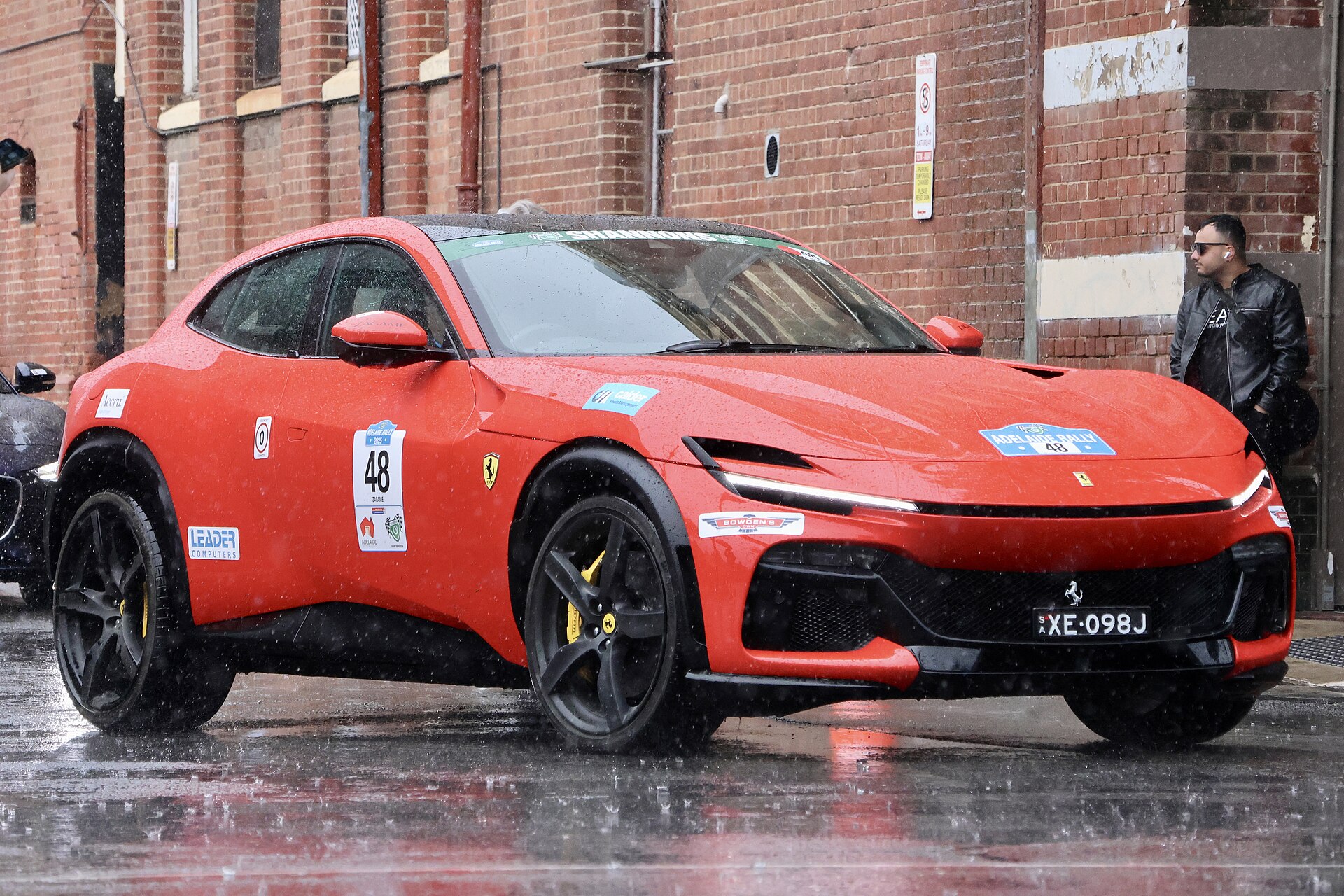
- Start with a series-production car you intend to keep. A Ferrari Purosangue or Ferrari 12Cilindri, specified with resale in mind and held for the long term, is the most direct way to build standing.
For more on the city and the marque, see our Chicago city guide and the Ferrari marque hub. Remember that every rate above should be confirmed on the date of the transaction: the arithmetic holds, but the ordinances behind it change.
Frequently asked questions
How is a private-party used Ferrari taxed in Illinois?
Private sales are reported on IDOR Form RUT-50, which charges a flat amount by price band rather than a percentage. Chicago and Cook County titled-vehicle use taxes may still apply, so confirm with each revenue office.
Can a Chicago resident avoid city tax by buying from a suburban dealer?
Not reliably. Chicago and Cook County charge use taxes on titled vehicles that residents buy outside their borders, so the saving often shrinks at registration. Check current rates before planning the deal around location.
What does six months of Chicago winter storage cost for a Ferrari?
Estimated $1,800–$4,200 for a November–April season, assuming $300–$700 a month for climate-controlled storage. Transport and a spring detail add an estimated $550–$1,550; get written quotes.
Do Chicago-area Ferrari dealers use anti-flip agreements?
Buyers of limited models are often asked to sign resale restrictions covering a set holding period. Terms vary by dealer and model, so read the agreement before placing a deposit; breaking it can end future allocations.
Can you drop insurance on a Ferrari while it is in winter storage?
Canceling outright is risky, because a stored car still faces fire, theft and damage at the facility. Many collector-car insurers offer reduced storage-period policies that keep comprehensive coverage, so ask before canceling.