Buying an Aston Martin Vantage: Allocation, Spec Strategy, and the Case for the V8
A
ston Martin's public identity has always rested on the grand tourer — the DB nameplate, the long bonnet, the brief of crossing a continent without complaint. The Vantage occupies a different corner of the same showroom, and buyers who arrive at it carrying assumptions from the GT line tend to make expensive decisions.Those decisions are rarely about the car itself. They are about how Aston distributes it, which options a second owner will actually pay for, and a persistent belief that the twelve-cylinder halo car is the one worth owning.
What follows is a buying playbook for the marque's driver's car.
How Allocation Actually Works On A Vantage
Buyers coming from Porsche or Ferrari import a mental model that does not apply here. The core Vantage — coupe or Roadster — is an order car rather than an allocated one: you configure it, place a deposit, and wait for a build slot rather than campaigning a dealer for the privilege of spending money.
That distinction is worth internalising before you walk in. Where a Porsche GT car or a Ferrari special is rationed by relationship history, a standard Vantage is generally available to any qualified buyer at any franchised dealer with room in the production calendar — the constraint is the factory's build schedule, not your purchase record.
What the dealer relationship does buy you is time and specification depth. A dealer holding an open slot can get you into a car months earlier than one starting a fresh build request, and an experienced Aston salesperson will walk you through Q by Aston Martin — the marque's bespoke arm — rather than defaulting to the configurator's safe presets.
Keep in mind what this means for residuals. The Vantage is a materially less stressful purchase than the allocation politics that govern Porsche's GT cars, and there is correspondingly no artificial scarcity propping up its used value — which is exactly why spec discipline carries more weight here than on a car the market is already fighting over.
The Variants That Do Carry Allocation
Not everything wearing the Vantage badge is freely orderable. A short list of limited-run cars behaves like a genuine allocation product, and on those, dealer relationship, deposit timing, and build number all matter.
- V12 Vantage (2022). Aston Martin stated a production run of 333 cars for the twin-turbocharged 5.2-litre send-off, with published output of 690 hp. Verify the build number and the run total against the car's build sheet and Aston's own press material before you transact.
- Vantage AMR (2019–2020). A strictly limited run fitted with a seven-speed manual gearbox — the last manual Vantage, and the reason it trades at a premium the automatic cars never approach. Confirm the exact allocation figure and current market against auction records rather than a dealer's asking price.
- Q by Aston Martin commissions. Paint-to-sample colours, bespoke leather, and one-off trim detailing. These lengthen lead times considerably and require a dealer genuinely willing to manage the process rather than talk you out of it.
Where the standard car is a transaction, these are negotiations. If a limited Vantage is the eventual goal, the relationship you build buying an ordinary one is the relationship that gets the call two model years from now — the same dynamic collectors already understand from the manual-gearbox supercar market.
Spec Strategy: What Survives Resale
The Vantage rewards restraint on the configurator and punishes indulgence. Options fall cleanly into two groups: the ones a second owner will pay for, and the ones they will quietly discount.
The boxes that consistently read as value to the next buyer include:
- Carbon-ceramic brakes. The most defensible line on the sheet — expensive new, effectively impossible to retrofit, and actively searched for on used listings. They also remove a rotor-replacement bill that lands on iron-braked cars in the hands of anyone who uses the car properly.
- A disciplined paint and trim pairing. Aston's deeper metallics, its restrained greens and greys, and its satin finishes hold better than a loud one-off. Q paint-to-sample can add value when the colour is tasteful and fully documented, and it can strand a car on a dealer floor when it is not.
- The carbon exterior packs. Splitter, sills, diffuser, and mirror caps in exposed weave. Widely specified, widely wanted, and visually load-bearing on a car with this short a wheelbase.
- Sports Plus or performance seating. Buyers cross-shopping a Vantage against a 911 or an AMG GT expect a properly bolstered seat, and the base chair reads as a compromise on a car in this bracket.
- Bowers & Wilkins audio. Not a driving upgrade, but a box this segment treats as an expected inclusion rather than a bonus.
The boxes to leave alone are just as consistent. Novelty interior colourways narrow the buyer pool to a single person and are almost always negotiated against at resale; wheel finishes with a short fashion cycle date the car faster than the bodywork does; and anything that can be fitted later by a specialist should be fitted later by a specialist, because you will pay full list for it new and recover almost none of it.
All of this adds up to a simple rule. Specify the things that are structural, permanent, or impossible to retrofit — and treat everything else as consumption rather than investment.
The Case For The V8
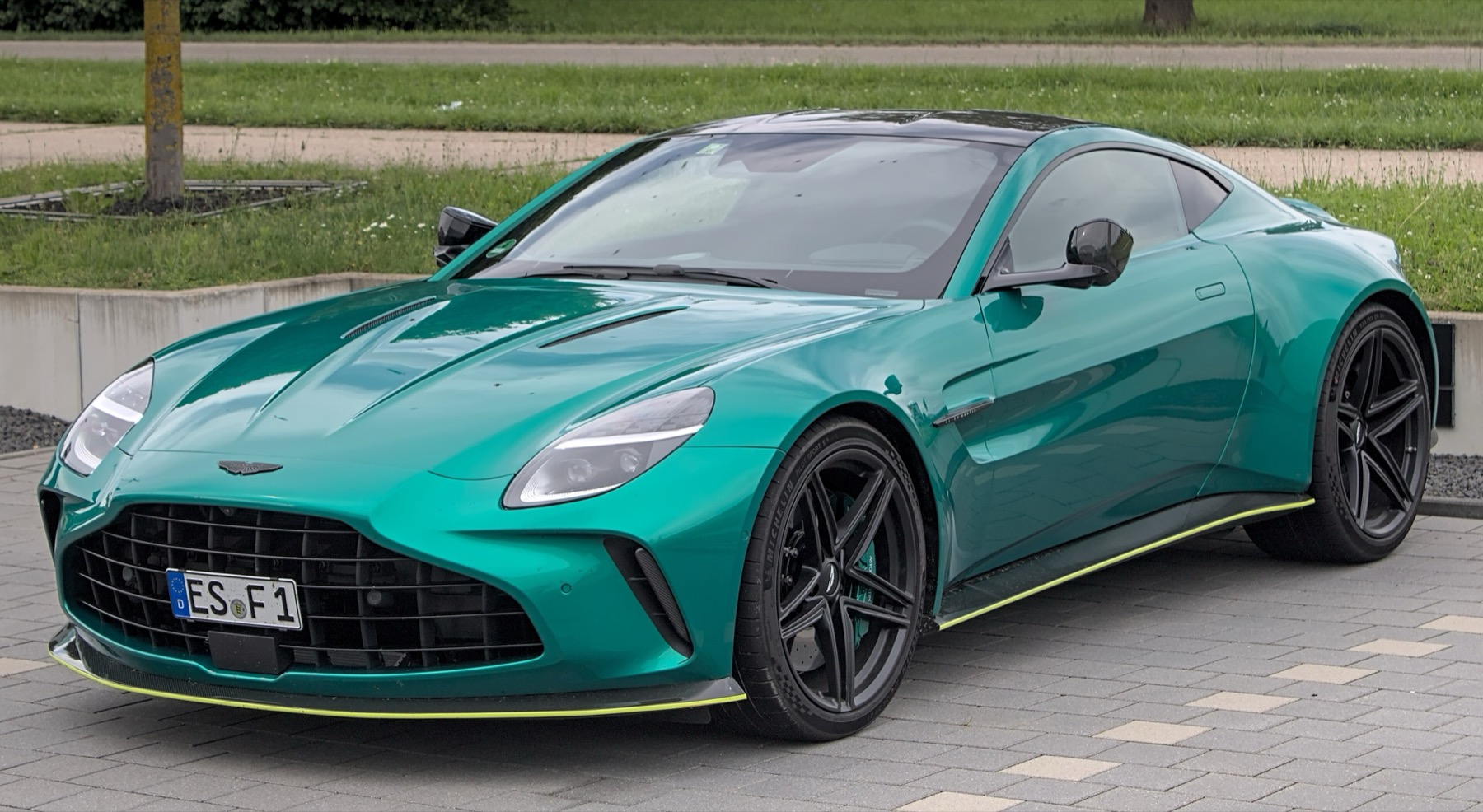
The Mercedes-AMG-sourced 4.0-litre twin-turbo V8 has carried the Vantage since the car's 2018 relaunch. Aston Martin published 503 hp for the original car, 528 hp for the F1 Edition introduced in 2021, and 656 hp for the substantially reworked Vantage revealed in 2024 — confirm the figure for your exact model year against the window sticker, because output moved meaningfully across the run.
The argument for that engine over the V12 is partly financial and partly practical. The V12 Vantage is a collector object priced as one: you are buying scarcity and provenance rather than usable pace, and the 333-car run means the market prices it against auction comparables rather than against other Vantages.
The V12 Vantage is a scarcity asset. The V8 is the car you can actually drive on a Tuesday.
The practical case is stronger still. An AMG-derived V8 is one of the best-understood performance engines in circulation, which means independent specialists can work on it, parts availability is sane, and a service quote does not require a deep breath.
There is also a range-positioning point that goes unmade in most coverage. The Vantage and the DB12 are not competing for the same buyer — one is a short-wheelbase driver's car and the other is a continent-crossing GT, a distinction we drew out at length in our DB12 versus Continental GT comparison. Buying a Vantage because it is the cheaper Aston is the wrong reason to buy one; buying it because you want the harder-edged car is the right one.
Where The Used Market Sits
The 2018–2021 cars are the entry point to the nameplate, and the first owner has already absorbed the steepest part of the curve. Aston's mainstream models have historically given up a substantial share of original MSRP in the first three years — treat any blanket percentage you read as unverified, and price the specific car against KBB, Edmunds, and Hagerty valuations for that exact model year and specification.
The honest weakness of the early cars is the cabin. The first-generation infotainment is Mercedes-sourced and a generation behind what the interior around it promises — the 2024 car replaced it with Aston's in-house system, and that alone accounts for a meaningful share of the price gap between the two.
On inspection, a Vantage rewards the same discipline as any used Aston in the DB11 bracket. Have a marque-experienced independent measure carbon-ceramic rotor wear rather than eyeball it, check the front splitter and underbody for the kerb damage this car's ground clearance invites, note tyre manufacture dates on a low-mileage example, and read the service history as a document rather than a stack of stamps.
Aston Martin operates an approved-used programme for franchised-dealer cars — confirm current coverage, term, and transferability with the dealer directly, because programme names and warranty lengths change between model years. A car with remaining factory or approved-used cover is worth paying for on an engine and gearbox of this complexity.
Running Costs, Honestly
The Vantage is not a cheap car to keep, and nothing about the AMG engine makes it one. Budget for annual servicing, tyres that wear at the rate a 500-plus-horsepower rear-drive car wears them, and the brake bill that arrives eventually on iron rotors — the broader arithmetic is laid out in our guide to supercar ownership costs.
What it is, relative to its peers, is predictable. That predictability is the quiet argument for the V8 restated in financial terms.
Editorial Recommendation
For a buyer entering the nameplate now, our position is specific:
- Buy the V8, not the V12, unless you are explicitly buying a limited-run asset and are comfortable pricing it against auction comparables.
- Target a 2019–2021 V8 coupe with carbon-ceramic brakes, the carbon exterior pack, and upgraded seating, in a colour a second buyer would also have chosen.
- Step up to the 2024-onward car if the interior and infotainment matter to you — that is what the premium buys, and it is a defensible reason to pay it.
- Skip the configurator's novelty trims entirely. Every dollar there is a dollar you will not see again.
- Build the dealer relationship anyway. The standard car does not require it; the next limited Vantage will.
More analysis of the marque's range, residuals, and dealer landscape sits on our Aston Martin brand hub.