Buying an Aston Martin Vanquish: Allocation, Spec Strategy, and Where the V12 Flagship Sits in the Range
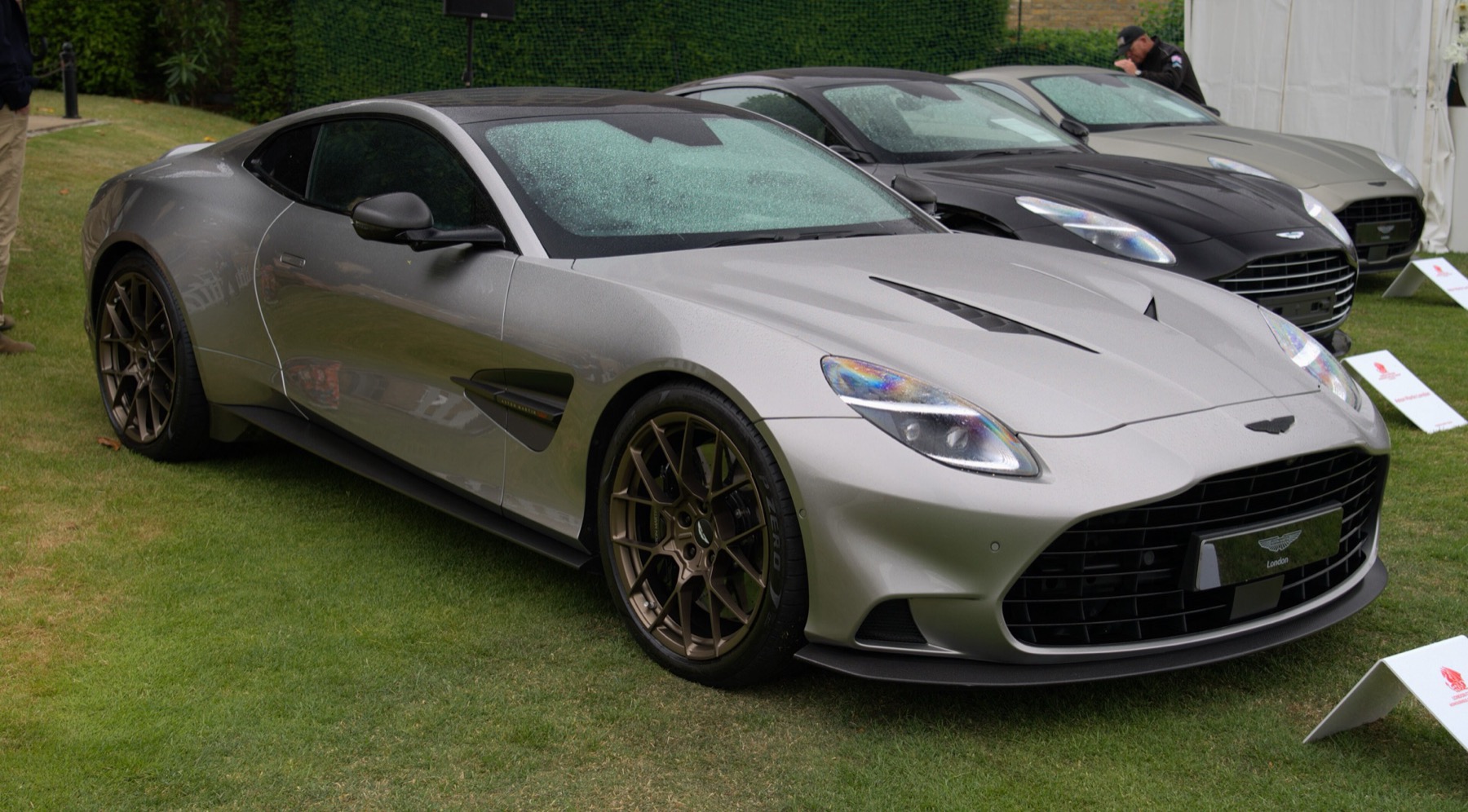
Aston Martin
has said it will build roughly 1,000 Vanquish coupes a year, worldwide, across every market the marque serves. Spread over a retail network the company describes as spanning more than 50 countries, that is a thin allocation by any measure.The specification is the part most buyers research first — a 5.2-liter twin-turbo V12 rated by the factory at 824 hp and 738 lb-ft, rear-wheel drive through an eight-speed automatic, a claimed 214 mph. What decides whether you take delivery inside this first cycle is something less public: how a marque distributes a car it has deliberately made scarce, and what it expects from a buyer before it does.
What follows is a buying playbook. It covers where the Vanquish sits above the DB12, who realistically receives a first-cycle car, how far the Q by Aston Martin ladder can move your final number, and which of those choices the secondary market tends to pay back.
Where the Vanquish Sits in the Aston Martin Range
The current sports-car lineup runs Vantage, then DB12, then Vanquish, with the DBX707 covering the SUV side of the business. US market reporting puts Vantage in the high $180,000s to low $190,000s and the DB12 coupe near $250,000, which leaves the Vanquish alone at the top as the marque's V12 flagship.
The distance between DB12 and Vanquish is wider than the badge hierarchy implies. DB12 is a 671-hp twin-turbo V8 grand tourer with vestigial rear seats, while the Vanquish is a strict two-seater on a longer wheelbase, carrying a twelve-cylinder engine that exists nowhere else in the range.
Read the price gap accordingly. Roughly $180,000 buys the only V12 Aston Martin currently sells, in a body the marque has committed to building in small numbers — the horsepower is almost incidental to the scarcity.
If you are cross-shopping inside the marque rather than above it, our read on the DB12 against the Bentley Continental GT covers the grand-touring decision, and the Vantage buying picture covers the entry point to the range.
What Aston Martin Actually Built
The Vanquish is a new car rather than a re-trimmed DB12, and the differences are structural. The elements that matter to a buyer, rather than to a spec sheet, include but are not limited to:
- Engine. A 5.2-liter twin-turbo V12, rated at 824 hp and 738 lb-ft by Aston Martin — a development of the marque's own twelve rather than a sourced unit, which matters given the AMG-derived V8 used further down the range.
- Structure and chassis. A stretched version of the bonded-aluminum architecture, with Bilstein DTX adaptive dampers and an electronic rear differential. The longer wheelbase is a deliberate stability choice for a rear-drive car making this much torque.
- Brakes and wheels. Carbon-ceramic brakes are specified as standard equipment rather than as a cost option; confirm the fitment on your build sheet, since standard content can shift between model years.
- Cabin. Two seats only, with Aston Martin's in-house infotainment rather than the older sourced system. Luggage space behind the seats replaces the DB12's small rear bench.
Taken together, this is a car engineered around a single powertrain the marque intends to keep alive. That intent — more than any individual output figure — is the argument for buying one new rather than waiting out the first depreciation cycle.
The Allocation Reality
Constrained allocation is not a marketing posture at these volumes; it is arithmetic. A four-figure global run distributed across dozens of markets leaves most US dealers with a small number of cars per model year, and those cars are typically spoken for well before the model reaches showroom floors.
What a dealer weighs when placing one is consistent across the segment. Purchase history at that specific store carries the most weight, followed by what is currently in your garage, whether you have flipped a car out of that dealership before, and how flexible you are on specification and delivery timing.
The most common mistake is treating allocation as a transaction. A buyer who walks in cold with a deposit and a spec sheet is competing against clients the dealer has invoiced three or four times — and losing, in almost every case.
Two practical notes. First, ask which cars the store has already committed and where you would fall in the order bank, in writing if possible; second, read the contract language on resale, because low-volume flagships increasingly carry holding periods or rights of first refusal that buyers discover after signing.
Our broader piece on how allocation actually works across the marques covers the mechanics in more depth, including how order banks and build slots are managed at the factory level.
Q by Aston Martin: Collection and Commission
Q by Aston Martin is the marque's personalisation arm, and it operates in two tiers that behave very differently on your invoice. Collection covers curated expansions of the standard catalog — extended paint palettes, alternative leathers and stitching, wheel and caliper finishes — priced item by item, and typically landing in five figures across a thoughtfully specified car.
Commission is the bespoke tier. Here you are developing color to sample, sourcing materials, and asking for detail work that does not exist in the catalog, which can add six figures to the car and extend the build slot by months.
Keep in mind that the two tiers carry different resale consequences. Collection work is legible to the next buyer; Commission work is legible mainly to you, and the market prices it accordingly.
Which Options Hold Value
Specification is the one part of this purchase you fully control, and it is where first-cycle buyers most often lose money quietly. Options that tend to return their cost — or at least widen your buyer pool — include but are not limited to:
- Color, chosen conservatively. A strong catalog color or a restrained paint-to-sample commission travels well. Highly personal colors narrow the resale audience sharply, regardless of what they cost to develop.
- Carbon-fiber roof and exterior detail packs. These read as period-correct flagship content to the next owner and are difficult to add retroactively.
- Wheel and brake finishes. Inexpensive relative to the car, and among the first things a used buyer notices. Neutral finishes outperform statement ones.
- Interior material upgrades, within reason. Quality leather and a coherent two-tone scheme hold up; contrast stitching in a deeply personal scheme does not.
- Full Commission interiors. Budget these as consumption rather than equity. They are the right call if you plan to keep the car, and a documented cost if you do not.
Overall, the pattern across low-volume flagships is that restrained specification in expensive materials outperforms expressive specification at the same spend. The next buyer is paying for the car, not for your taste.
How It Prices Against the Field
The Vanquish enters a narrow competitive set — front- and mid-engined flagships above $400,000, most of them from marques that also manage allocation tightly. The figures below are reported US starting prices, approximate and before options, destination, and taxes; verify each with a franchised dealer before you plan around them.
| Model | Engine | Reported US start (approx.) | |---|---|---| | Aston Martin Vanquish | 5.2L twin-turbo V12, 824 hp | $420,000–$450,000 | | Aston Martin DB12 | 4.0L twin-turbo V8, 671 hp | ~$250,000 | | Ferrari 12Cilindri | 6.5L naturally aspirated V12 | ~$472,000 | | Lamborghini Revuelto | 6.5L V12 plug-in hybrid | $600,000+ | | Bentley Continental GT Speed | 4.0L twin-turbo V8 hybrid | $300,000+ |
The nearest philosophical rival is Ferrari's front-engined twelve, and the two cars answer the same question differently — our read on the 12Cilindri covers Maranello's side of it. Against the Revuelto, the Vanquish is the softer and longer-legged proposition; against the Continental GT Speed, it is the sharper and considerably rarer one.
What Earlier Vanquish Generations Suggest About Residuals
The nameplate has two prior lives, and both are instructive. The original V12 Vanquish (2001–2005) shipped with an automated manual the market never warmed to, and the later Aston Martin Works manual conversion became the configuration collectors chase — a pattern we have traced repeatedly in the manual supercar market.
The second-generation car (2012–2018) is the more relevant residual comparison. Listings for those coupes commonly sit well below half of their original US MSRP, an estimated 35–55% retained depending on mileage, specification, and service history; treat that as a listing-level observation rather than a valuation, and check Hagerty's tools and recent auction results before anchoring on it.
Volume, engine type, and market position differ enough that the current car will not simply repeat that curve. What carries forward is the pattern — Aston Martin residuals reward provenance, documented service, and conservative specification far more than they reward original sticker, which is also the story in the DB11 used market.
Ownership: Warranty, Service, and Running Costs
Aston Martin's new-car coverage in the US has run three years with unlimited mileage; confirm current terms and any extension options in writing at the time of order, since warranty structures change between model years. On the used side, Aston Martin Timeless is the marque's approved pre-owned program, adding a multi-point inspection and a warranty extension through franchised dealers.
Budget beyond the purchase. Annual dealer servicing, high-performance tires on large-diameter wheels, specialist insurance on a $400,000-plus car, and eventual carbon-ceramic brake replacement are all five-figure-adjacent line items, and none of them are optional if you want the service book to read correctly at resale.
If the car is going on structured finance rather than cash, run the numbers against holding period instead of monthly payment — our piece on financing a six-figure exotic covers how balloon structures interact with a depreciating flagship.
The Editorial Recommendation
For a first-cycle buyer with dealer history, the case for ordering new is straightforward — this is a low-volume V12 in an era when twelve-cylinder engines are being retired rather than developed. For everyone else, the disciplined move is to let the first two model years settle, then buy a well-specified car with books, tools, and a clean pre-purchase inspection.
If you are ordering, our recommendation on specification:
- Color: a strong catalog color, or a Collection-tier paint-to-sample in a conservative register. Avoid developing a color you would not choose twice.
- Roof and exterior: the carbon-fiber roof and carbon exterior detail content. Both are difficult to replicate later and read as flagship specification to the next owner.
- Wheels: the quieter of the available finishes, in the standard flagship diameter.
- Interior: upgraded leather, restrained contrast, and full-specification audio. Skip the personal monogramming.
- Commission work: only if this is a keeper. Price it as spend, not as equity.
Whichever direction you go, treat the paperwork with the same attention as the build sheet. Read the resale language, confirm the warranty terms in writing, and — on any used car — insist on a pre-purchase inspection at a franchised dealer before funds move.