Paint Protection Film, Ceramic Coating or a Wrap on an Exotic: What Each Costs and What It Does to Resale
T
he paint on a contemporary exotic is built up from primer, base and clear layers, with robotic application and hours of hand finishing. On a paint-to-sample car it may also be the most expensive option on the build sheet, and it is the first part of the car the road starts to wear down.Stone chips on the nose, sand-blasting across the rocker panels and etching from bug residue all build up faster on a low, wide car with a long front overhang. That said, the protection conversation usually comes up at the least analytical point of ownership — the delivery appointment, with a film package already on the menu.
This is why the decision deserves the same discipline as the option list itself. Below, we compare paint protection film, ceramic coating and color-change wraps on cost and longevity, and on what matters most to buyers spending six figures: how each one reads when the car is sold.
What Each Product Actually Does
The three products are often sold together, which hides the fact that they solve different problems. Keep in mind that only one of them is designed to stop a rock.
Paint Protection Film
Paint protection film (PPF) is a clear thermoplastic urethane applied over the factory clear coat, generally in the range of 6 to 10 mils thick depending on the product line. Check the specific film's data sheet. Its job is to be sacrificed: the film takes the impact, the abrasion and the chemical exposure so the paint underneath does not.
Modern premium films include a self-healing top coat, so light swirls and fine scratches level out with heat from the sun or warm water. Matte and satin versions also exist, which let an owner change a gloss car to a satin finish without touching the paint.
Ceramic Coating
A ceramic coating is a liquid polymer, usually silica-based, that cures into a hard, very thin layer bonded to the clear coat or to film. It is measured in microns rather than mils, and it adds gloss, sheds water and resists light chemical etching.
What it does not do is stop a stone chip. In fact, the 9H hardness claims in coating marketing come from a pencil-hardness test and should not be read as impact resistance.
Color-Change Wrap
A color-change wrap is usually a cast vinyl film, much thinner than PPF, chosen for appearance rather than protection. It offers some defense against light abrasion and UV, but it is not engineered to absorb impacts the way urethane film is.
Additionally, a growing category of colored and textured urethane films sits between the two. These films change the color and give PPF-grade impact protection, at a price premium over vinyl.
What Each Costs On An Exotic
Film and coating prices are set by each installer, vary by region and depend heavily on the car. There is no published pricing index comparable to KBB or Edmunds for vehicles. The ranges below are therefore editorial estimates of general US installer pricing, and they are a starting point for comparing quotes rather than fixed figures.
Estimated ranges for a mid-engine exotic or a 911-class sports car include:
- Front-end PPF. Bumper, partial or full hood, front fenders and mirrors run an estimated $1,800–$3,500. Cars with complex intakes and splitters sit at the top of that range.
- Extended or track front-end. Adding rocker panels, the impact zones ahead of the rear wheels, A-pillars and the roof leading edge raises the estimate to roughly $3,000–$5,500.
- Full-body PPF. Covering every painted panel is estimated at $6,000–$12,000 for a typical exotic. Extensive aero, exposed carbon bodywork or a request for wrapped edges push it higher.
- Ceramic coating over paint. A professional multi-year coating, including paint correction, is estimated at $1,200–$3,500. Correction labor is often the larger share.
- Ceramic coating over film. A film-specific coating applied on top of PPF adds an estimated $500–$1,500.
- Color-change wrap. Cast vinyl on an exotic is estimated at $5,000–$10,000. Colored urethane film commonly costs well above that, often full-body PPF pricing plus a premium.
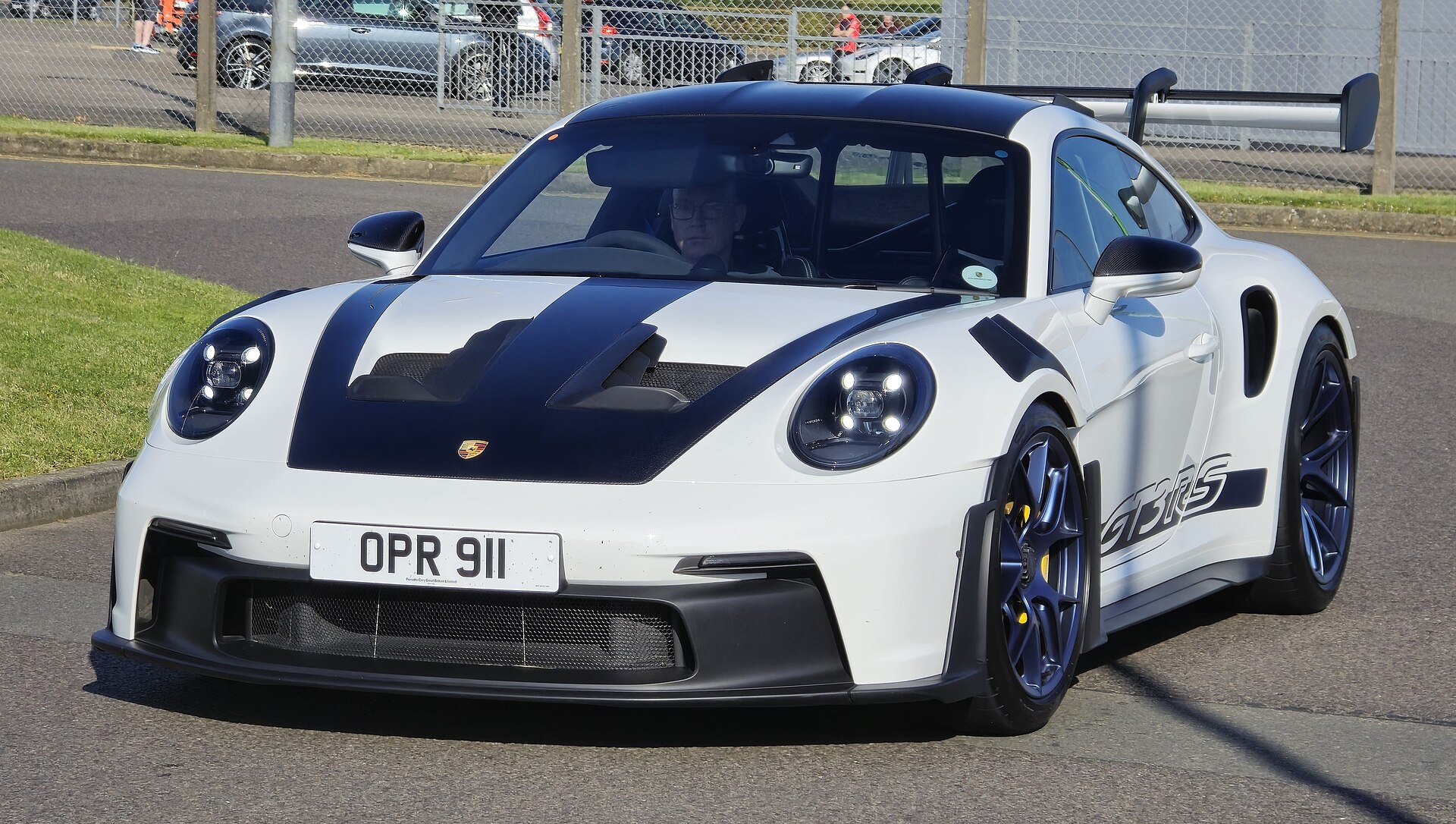
All of these figures move with the car. A Porsche 992 GT3 RS, with its louvered fenders, swan-neck wing and dense aero detailing, will be quoted very differently from a smooth-bodied grand tourer of similar value.
For context, our supercar ownership costs breakdown places film next to insurance, service and consumables. Film is modest next to the cost of insuring a supercar, and it is still a real line in the first-year budget.
Full-Body Versus Front-End Coverage
Front-end coverage protects the surfaces that collect the most chips on any car: the nose, the hood leading edge, the mirrors and the front of the fenders. On a front-engine grand tourer that spends its life on the highway, it is a defensible and economical choice.
However, a front-end package leaves a visible edge, typically a straight line across the hood or a cut at a fender seam. Over several years the unfilmed paint can age differently from the filmed paint, and that line can become visible, especially on dark and solid colors.
Full-body coverage removes the edge problem. It also protects the doors, rear quarters and rockers, which mid-engine cars expose to debris thrown by their own front tires. What's more, full coverage is the only way to change the finish from gloss to satin without paint, and it also guards against door dings and car-wash marring.
Keep in mind that installation quality matters as much as coverage. Pre-cut patterns from the film maker's software keep blades off the paint. Many premium installers prefer bulk film because it lets them wrap edges cleanly.
Bulk installs are excellent work when the installer uses knifeless tape or a technique that never touches the clear coat. Ask which method the shop uses, because on-car trimming done carelessly leaves cuts that appear once the film comes off.
Ceramic Layering: Over Paint, Over Film, Or Both
Coating and film work together, which is why installers usually sell them as a pair. The real question is where the coating goes.
On a car with front-end PPF, the common approach is to coat the exposed paint and the film separately, using a film-specific product on the urethane. On a full-body car, the coating goes only on the film, where it adds gloss, slows staining and makes hand washing easier.
Note that some film makers specify which coatings are compatible with their top coat, and an unapproved product may affect warranty coverage. Ask the installer to confirm compatibility in writing, and remember that paint is generally not coated before film goes on, because a coating can weaken film adhesion.
How Long Each Lasts
How long each product lasts depends on climate, storage, washing habits and the specific product line. Here is how the three typically compare:
- PPF. Premium films from manufacturers such as XPEL, 3M and STEK typically carry 10-year warranties against yellowing, cracking and delamination. Terms vary by film line, so confirm the specific warranty, and expect cars parked outdoors in high-UV markets to show edge lift or haze sooner.
- Ceramic coating. Claimed life ranges from about one year to several years depending on the product tier. Every claim assumes the owner follows the maintenance protocol, and a top layer usually needs periodic refreshing.
- Vinyl wrap. Cast vinyl data sheets rate durability in years, with shorter ratings for horizontal surfaces such as the hood and roof than for vertical panels. Plan to remove a wrap inside its rated window, because aged vinyl releases less cleanly.
Overall, film and wrap both have a limited life — film because the urethane ages, vinyl because the adhesive becomes harder to release cleanly. This matters at resale, because film at the end of its life becomes a cost the next owner has to budget for.
How Buyers And Pre-Purchase Inspectors Read Film
This is the point where the decision either pays off or costs money. Experienced buyers, and the specialists who conduct a pre-purchase inspection, read film as evidence of how the car was kept and of what might sit underneath.
Paint Depth Readings Through Film
A standard paint depth gauge measures everything above the metal, so film adds its own thickness to every reading. A competent inspector allows for this by looking for consistency from panel to panel rather than at absolute numbers, because a sudden jump on one panel can still signal refinish work beneath the film.
Additionally, carbon-fiber and composite panels cannot be read with a conventional magnetic or eddy-current gauge. On cars with significant carbon bodywork, the service records and the film invoice therefore carry more weight.
What Inspectors Flag
Inspectors and informed buyers typically note:
- Edge lift and contamination. Dirt lines along film edges suggest age or a hurried install.
- Yellowing or haze. Older or lower-grade films discolor, especially over white and light paint.
- Knife marks. Fine cuts in the clear coat at panel edges, visible once film is lifted, point to careless on-car trimming.
- Fresh film on a used car. A newly filmed panel can be honest protection or a way to mask a respray. The paint gauge and the installer invoice settle the question.
Documentation That Supports Value
Film on its own does not carry a reliably measurable price premium, and the valuation guides we consult, including KBB, Hagerty and Edmunds, do not list PPF as a value adjustment. What film does is preserve original paint, and original paint is what the market rewards. That is especially true on collector-grade cars and on options-sensitive models such as the 911.
Accordingly, keep the installer invoice, the film brand and line, the install date, a coverage map and the warranty registration. A buyer who sees a documented full-body install from a recognized shop reads it as care, while unexplained film on a used car raises a question.
Color-Change Wraps At Resale
Wraps read differently, because a buyer cannot see the paint underneath. Many buyers will ask for the wrap to be removed before the sale, or will discount the car until it is.
On a paint-to-sample car or a car in a desirable factory color, the wrap hides the very option that drives value. Remember that removing a wrap past its rated life can lift clear coat or leave adhesive residue, and that cost falls on the seller.
The Delivery-Day Package
Dealer-arranged film at delivery is convenient, and some dealers work with excellent installers. That said, the package is often a third-party service resold at a markup, and it may be rolled into the financing, where its cost compounds over the term.
Before signing, ask about the following:
- Who installs it. The shop's name, whether the film manufacturer has certified it and whether the work is done on-site.
- Which film. The brand and specific product line, not a dealer house name.
- What coverage. A panel-by-panel map, including whether edges are wrapped.
- What warranty. Manufacturer warranty registration in your name, and whether it transfers to a later owner.
Keep in mind that nothing stops you from taking delivery and booking film the following week with an independent installer. The car should travel as little as possible in between, which is why some owners arrange enclosed transport straight to the film shop.
If you are buying a certified pre-owned exotic, ask whether the dealer's reconditioning included any refinish work before you film it. Film applied over undisclosed paint work creates exactly the question an inspector will raise at your sale.
Editorial Recommendation
The right answer depends on the car, the color and how the car is used. Our recommendations by scenario are as follows:
- Mid-engine exotic, any color. Full-body PPF with wrapped edges where practical, plus a film-specific ceramic coating on top. On this layout the rear quarters and rockers take debris from the front tires.
- Paint-to-sample or special-series car. Full-body PPF, thoroughly documented. For cars such as the Ferrari special series, treat the film invoice as part of the car's provenance, next to the window sticker.
- Daily-driven grand tourer. Extended front-end film with a ceramic coating on the remaining paint. You accept a visible edge in exchange for a lower outlay.
- Color change. Colored urethane film rather than vinyl where budget allows. Photograph the paint before installation, and remove or disclose the film well before sale.
- Low-mileage garage car. A quality ceramic coating may be enough on its own. Add film only if the car will see open roads or track days.
In the end, film, coating and wrap are line items in the larger ownership ledger. They are modest next to depreciation, and meaningful next to a respray that the market typically discounts.
Choose the protection that preserves original paint and document it thoroughly. Do that, and the decision will hold up well with whoever owns the car next.
Frequently asked questions
Can a pre-purchase inspector measure paint depth through PPF?
Yes. A gauge reads film and paint as one layer, so readings run uniformly higher. Inspectors look for panel-to-panel consistency, and a single high panel can still reveal refinish work under the film.
Should a color-change wrap be removed before selling an exotic?
Usually. Buyers want to see the factory paint, especially on paint-to-sample cars. Remove the wrap inside its rated life to avoid lifted clear coat or adhesive residue, and keep photos of the paint from before the install.
Can ceramic coating be applied on top of paint protection film?
Yes, with a film-specific coating, at an estimated $500–$1,500 extra. Confirm that the film maker approves the product, since an incompatible coating may affect the film warranty.
Is the dealer's film package at delivery a good deal?
Sometimes, but it is often a marked-up third-party install. Before agreeing to it or financing it, ask for the installer's name, the film brand and line, a coverage map and warranty registration in your name.
How long does paint protection film last on an exotic?
Premium films from XPEL, 3M and STEK typically carry 10-year warranties against yellowing and cracking. Garage-kept cars often reach that, while cars parked outdoors in high-UV climates may show edge lift sooner.