Buying a Maserati MC20: Allocation, the Nettuno Engine, and a Depreciation Curve That Cuts Both Ways
For
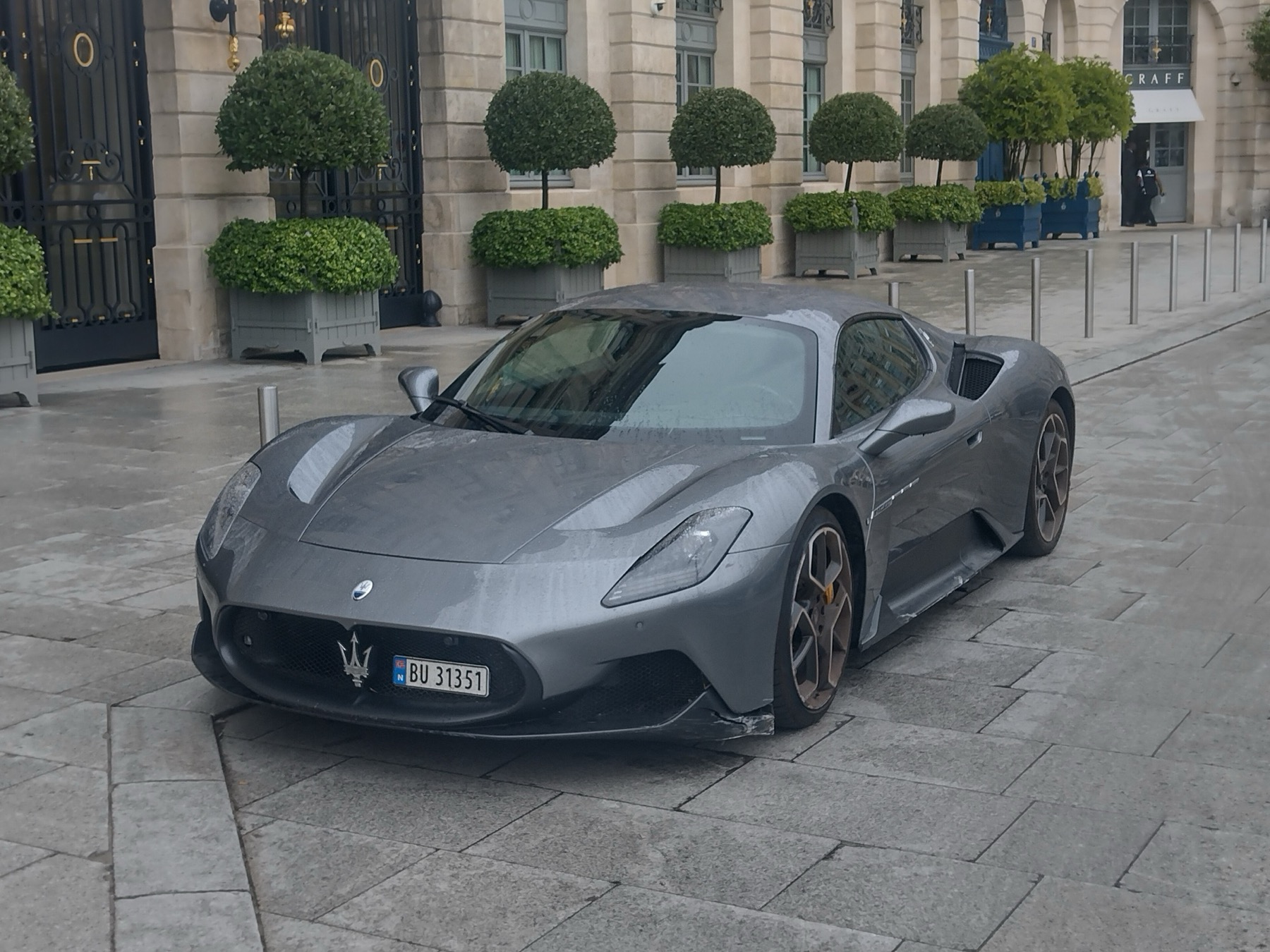
the better part of two decades, the engine in a Maserati was not, strictly speaking, a Maserati engine. The marque leaned on Ferrari-built power through its GranTurismo and Quattroporte years, which produced fine cars and an awkward answer to the question of what, mechanically, made a Maserati its own.The MC20 ended that arrangement in 2020 with the Nettuno — the first engine Maserati designed and built in-house in roughly twenty years. That single fact reframes the entire buying decision, because it changes what you are actually paying for.
Yet the market has been slow to agree. The MC20 carries real engineering credibility and a depreciation curve steep enough to make a new-car buyer wince — and a used buyer pay close attention.
The Nettuno Engine Is the Real Argument for the Car
The Nettuno is a 3.0-liter twin-turbocharged V6 producing 621 horsepower and 538 lb-ft of torque, per Maserati's published figures. What makes it notable is less the output than the architecture beneath it.
At its center sits Maserati Twin Combustion (MTC), a pre-chamber ignition system derived from Formula 1 engine technology. Each cylinder runs a pre-combustion chamber alongside a conventional spark plug, enabling a more complete, efficient burn than a standard road-car V6 manages.
That technology is the reason the engine matters to a buyer. You are not paying for a re-badged unit pulled from a corporate parts shelf — you are paying for hardware Maserati can credibly call its own.
The rest of the package follows suit. A carbon-fiber monocoque, butterfly doors, an eight-speed dual-clutch transmission, and a sub-2.9-second 0–62 mph time place the MC20 firmly in mid-engine supercar territory, again per Maserati's figures.
What a Maserati MC20 Actually Costs
The MC20 coupe launched in the United States at an estimated base MSRP near $212,000, with the open-top Cielo arriving later at a higher figure — estimated in the $260,000 range before options. Confirm both against current manufacturer MSRP and Edmunds before you negotiate, as model-year pricing has shifted since launch.
Options move the number quickly. Carbon-ceramic brakes, exposed carbon bodywork, and upper-trim personalization can push a well-specified coupe toward an estimated $240,000–$270,000 delivered.
Allocation: The MC20 Is Easier to Buy Than Its Rivals
Here the MC20 diverges sharply from the cars it competes against. A Ferrari or a Porsche GT product typically requires an allocation — a dealer's discretionary right to sell you the car, often earned through prior purchases and demonstrated loyalty.
The MC20 carries no such gate. Maserati dealers generally hold inventory, and the car rarely commands the dealer markups (ADM) that follow allocation-constrained models, which means you can usually transact at — or below — sticker.
For the opposite end of that spectrum, our analysis of Porsche 911 allocation reality lays out what genuine scarcity does to a deal. The MC20 is very nearly the inverse of that dynamic.
That accessibility is a genuine advantage for the buyer who wants the car rather than the chase. It is also, indirectly, part of the reason the depreciation curve looks the way it does.
The Depreciation Curve That Cuts Both Ways
Soft allocation and a brand still rebuilding its performance credibility have a predictable effect on the used market. Early MC20 coupes have, by multiple market accounts, depreciated faster than comparable mid-engine rivals.
Some two- to three-year-old examples have listed at an estimated 25–35% below their original delivered price — a figure to treat as a starting point and confirm against live comps on Hagerty, Edmunds, iSeeCars, and Bring a Trailer. The exact discount depends on mileage, specification, and condition tier.
For the first owner, that is the punishing side of the curve. For the second owner, it is the entire opportunity — the same logic we traced in our used-Ferrari depreciation sweet spot analysis.
The two paths, framed side by side:
| Buying path | Approx. entry (estimated) | Primary risk | Primary advantage | |---|---|---|---| | New coupe at MSRP | ~$212,000+ | Steep first-owner depreciation | Full warranty, free choice of spec | | Lightly used, 2–3 years | Est. 25–35% below MSRP | Verifying history and condition | Most depreciation already absorbed | | Cielo convertible | ~$260,000+ new | Higher entry, narrower resale | Open-air variant, lower volume |
Every figure above is an estimate for orientation only — confirm against live listings before any transaction.
The Cielo, the GT2 Stradale, and the Variant Picture
The MC20 line extends beyond the base coupe. The Cielo adds a retractable hard top with an electrochromic glass roof panel, while the GT2 Stradale is a lighter, more track-focused road variant positioned above the standard car.
Maserati has also discussed a fully electric Folgore version for the line. Confirm its current production and availability status directly before counting on it, as the marque's electrification timeline has moved.
How the MC20 Sits Against the Artura and the 296
The MC20's natural rivals are the McLaren Artura and the Ferrari 296 GTB, both mid-engine and both running forced-induction six-cylinder hybrid powertrains. The MC20 takes a different route — no hybrid system, a lighter mechanical package, and a lower price of entry.
That positioning is the MC20's clearest argument and its clearest compromise. It gives up the instant torque and headline figures of its hybridized rivals, and in exchange offers a purer, lighter, less complex car for meaningfully less money — a trade we examined in our McLaren Artura versus Ferrari 296 comparison.
What to Check Before Buying a Used MC20
A discounted exotic is only a good deal if the car is sound, and the MC20's early production years warrant ordinary diligence. Prioritize a pre-purchase inspection (PPI) from a specialist familiar with the platform, not a general independent shop.
Confirm complete service history, verify any remaining factory or extended warranty coverage, and check early-build cars for completed software and electronics updates. Carbon-ceramic-equipped cars should have their brakes assessed for wear, since replacement is a significant ownership cost.
Budget realistically for running costs beyond the purchase price — insurance, servicing, tires, and consumables on a carbon-monocoque exotic are not trivial, as our supercar ownership cost breakdown details. The discount on the sticker does not extend to the maintenance.
Editorial Recommendation
The MC20 is a stronger car than its resale reputation suggests, and the depreciation that troubles its first owners is precisely what makes it compelling to its second. For most buyers, the math points one direction.
Our position, for the buyer who wants the engineering without absorbing the worst of the curve:
- Buy used, not new. A two- to three-year-old coupe lets the first owner pay for the steepest depreciation while you inherit a nearly current car — verify the discount against live comps first.
- Favor the coupe over the Cielo unless open-air driving is non-negotiable, since the coupe is the cleaner value and the more straightforward resale.
- Specify for the platform, not the badge. Carbon-ceramic brakes, sensible mileage, and documented service history matter more to long-term value than paint or exposed carbon.
- Insist on a specialist PPI. The savings on entry should fund diligence, not replace it.
For a broader view of the marque's lineup and positioning, see our Maserati brand hub. The MC20 is the most persuasive argument Maserati has made for itself in years — and, for now, the market has priced that argument at a discount.