Ferrari Classiche Certification: What the Red Book Verifies, What It Costs, and What It Adds to a Car's Value
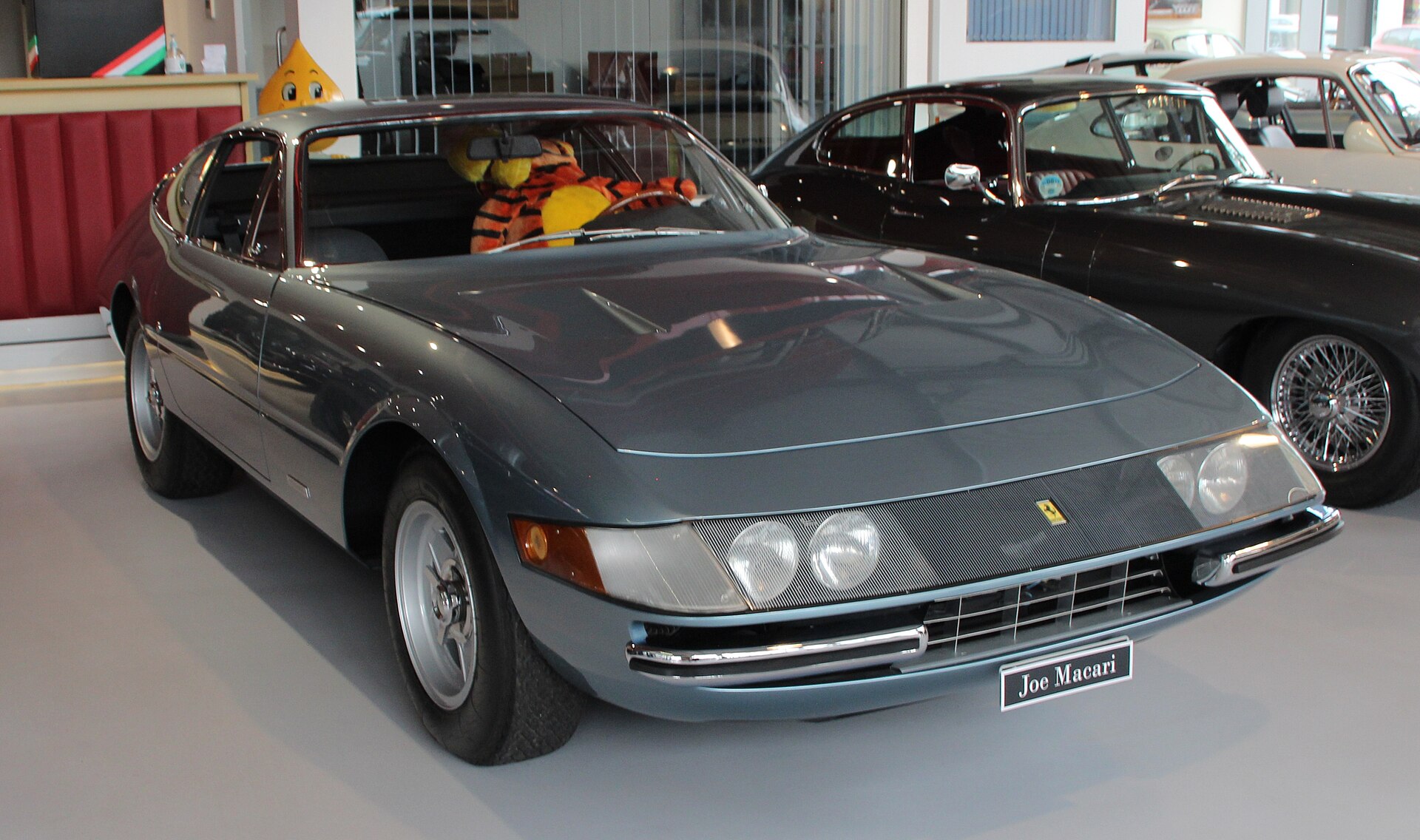
Every older Ferrari is valued twice: once as the car standing in front of the buyer, and once as the paper that says what that car is. As values for Maranello's earlier road cars have climbed, the second valuation has come to matter nearly as much as the first.
That said, most documentation is assembled by owners, dealers, and independent historians, and it varies widely in quality. Ferrari Classiche certification is the one document that comes from the factory itself — which is why collectors weighing an older Ferrari should understand exactly what it examines, what it costs, and how much of the asking price it can justify.
What Is Ferrari Classiche Certification?
Ferrari Classiche is the department inside the Maranello factory that restores, maintains, and certifies the marque's older cars. Published accounts date the department to 2005 or 2006, and Ferraris Online's history of the program places its introduction in 2005.
The department's best-known product is the Certificate of Authenticity, a hard-bound red volume in a matching case that identifies the car by serial number and model type. Accordingly, the market simply calls it the Red Book.
Eligibility is broader than many buyers assume. According to Ferrari Lake Forest's summary of the program, road cars more than 20 years old qualify, as do Special Series and sport models, while Formula 1 cars can be certified regardless of age.
In practice, this means that a 1990s 550 Maranello is now as eligible as a 1960s 275 GTB. It also means that the limited-production cars covered in our Ferrari Special Series guide sit inside the program from the outset.
What The Red Book Verifies
The certification is a comparison exercise. An authorized Ferrari dealer inspects and photographs the car, and the findings are measured against the factory's own build records before a certification committee in Maranello decides whether to issue the certificate.
The areas examined, as listed by authorized dealers, include:
- Chassis. The frame receives the closest scrutiny, and Ferraris Online reports that the process can include dimensional measurement and spectrometer analysis of the metal. A replaced or modified chassis is the hardest problem to resolve.
- Engine. The inspector checks the type, the number stampings, and their position against factory records. This is where most certification disputes begin.
- Gearbox and transmission. The same type-and-stamping check applies to the gearbox and differential. A correct-type unit and the unit the car was born with are two different findings.
- Suspension, brakes, and wheels. These must conform to the specification the car carried when it left the factory. Period-incorrect upgrades are a common reason for a deferred application.
- Bodywork and interior. The body configuration and trim are compared with the original build. A car converted from one body style to another will not pass as built.
All of these checks add up to a single statement: on the day it was inspected, the car conformed to the configuration Ferrari recorded for that chassis. The finished certificate is released only from Maranello and, per Ferrari Lake Forest, carries Piero Ferrari's signature.
What The Red Book Does Not Verify
A Red Book is a statement about authenticity, and buyers should be careful about reading more into it. It says nothing about ownership history, accident history, mileage profile, or the quality of recent service work.
This is why certification complements the documents described in our guide to provenance and history files and cannot replace them. Moreover, a certificate is dated, and it describes the car only as it stood when the inspection took place.
Keep in mind that a Red Book does not always mean the car retains the engine it was born with. Ferraris Online notes that Classiche has certified cars whose correct-type replacement engines were re-stamped by the department — and questions whether that adds any value over the same engine before the stamping.
For this reason, we recommend reading the pages inside the book and treating the cover as a starting point. A pre-purchase inspection (PPI) by a marque specialist remains necessary on any certified car, particularly if the certificate is more than a few years old.
The White Book: Attestation For Vehicles Of Historic Interest
Some of the most significant Ferraris could never pass a strict originality test, because they were modified during their working lives. In 2009, Ferrari introduced a second document for these cars, formally the Attestation for Vehicles of Historic Interest and informally the White Book.
According to Ferraris Online's account of the attestation, the car must retain its original chassis with legible, traceable serial numbers. The engine, gearbox, and differential must carry original stampings and be either the original units or the same type as the original, in a configuration used in period competition or created by a noted coachbuilder.
Naturally, the two documents are not interchangeable in a negotiation. A White Book confirms that a car is a genuine Ferrari with a legitimate period history, while a Red Book confirms that it matches the way it was first built.
What Does Ferrari Classiche Certification Cost?
Ferrari does not publish a US price list for certification, so every figure in circulation is a reported one. The fee scales with the rarity and complexity of the model, and the application is handled through an authorized dealer who can provide a written quote.
The most specific published figures come from Ferraris Online, and they should be read as estimates:
- Ferrari 308. A reported certification fee of approximately $3,750, up from approximately $2,000 in 2010.
- Ferrari 365 GTB/4. A reported fee of approximately $8,750, up from approximately $3,000 in 2010.
- Ferrari 250 GTO. A reported fee of approximately $16,250, up from approximately $7,500 in 2010.
- White Book attestation. A reported fee of $3,000 to $10,000 when the program launched in 2009.
These figures exclude the dealer's inspection and photography, which the same source put in the $1,500 range in 2010, as well as any additional metallurgy testing or archive research. Overall, the application fee is rarely the expensive part.
The larger cost is corrective work. If the committee finds a non-conforming component, the certificate is withheld until the car is returned to specification, and that work is billed separately.
At the far end of the scale, a Classiche representative told Hagerty in 2020 that a complete factory restoration takes fourteen months and can exceed one million euros for a special one-off. For context on routine running costs, see our breakdown of Ferrari service costs by model.
What Does Certification Add To A Car's Value?
This is the question with the weakest data behind it. No public index isolates certified cars from uncertified ones, and the price guides collectors rely on grade condition tier, not paperwork.
Two figures circulate, and both come from interested parties. In the same 2020 Hagerty report, the director of a rival factory heritage program put the added value of manufacturer certification at between 15 and 16 percent in the general market.
Ferraris Online, meanwhile, reports that Ferrari itself claims an increase of 15 to 20 percent — and describes that figure as generous and optimistic. We would treat the full 15 to 20 percent range as an estimated ceiling and not as an expected return.
There is also a structural reason to be cautious about any comparison of sale results. Cars that carry a Red Book tend to be the better-kept, better-documented examples to begin with, so a certified car that outsells an uncertified one may simply be the better car.
The same problem appears whenever a model trades in small numbers, as we discuss in our piece on thin-data depreciation. A handful of sales cannot separate the effect of a certificate from the effect of color, mileage, or a strong room on the day.
What can be said with more confidence is where the certificate matters most. For high-value cars with complicated histories — competition use, period engine swaps, restorations of uncertain quality — the Red Book removes the single largest doubt a buyer has, and the absence of one invites a discount.
For a later, lower-value car with a continuous service history and a known ownership chain, the effect is much smaller. In fact, Ferrari Lake Forest's own guidance concedes that not every classic Ferrari requires certification to represent a sound purchase.
When Certification Is Worth Pursuing
The decision comes down to the size of the doubt the certificate would remove, measured against the cost of obtaining it. Three situations tend to justify the application.
First, an uncertified car at the upper end of the market is harder to sell, and the major auction houses routinely note Classiche status in their catalog descriptions. Second, a car headed for concours competition or official Ferrari events may need the certificate for eligibility.
Finally, a buyer can use the process as a condition of sale. Making an offer contingent on a successful Classiche inspection shifts the risk of a non-conforming component back to the seller, where it belongs.
On the contrary, a 20-year-old series-production car bought to be driven is a weaker candidate. Buyers in that part of the market are usually better served by the service file and the specification — a point we make about gated cars in our guide to manual supercars.
Editorial Recommendation
Our position is that Classiche certification is a risk-reduction tool first and a value multiplier second. With that in mind, here is how we would approach it:
- Vintage V12 cars and competition models. Treat a Red Book or White Book as expected. Price an uncertified car as though corrective work will be required until an inspection proves otherwise.
- Limited-series cars of any age. Certification is available and increasingly assumed. Confirm it before discussing price.
- 1980s and 1990s series-production cars. Regard certification as a welcome addition. Do not pay the full estimated 15 to 20 percent premium for it on a car with an otherwise ordinary file.
- Any certified car. Read the certificate itself, note its date, and confirm what it says about the engine and gearbox. Commission an independent PPI regardless.
- Any uncertified car. Ask the selling dealer for a written fee quote and an opinion on likely findings before making an offer.
All of the above reflects one principle: the Red Book answers the question of what the car is, and the buyer still has to answer the question of what condition it is in. For model-by-model buying guidance across the marque, visit our Ferrari brand hub.