Valuing a 1990s Ferrari: How 348, F355, 456 and 550 Maranello Prices Are Set When No MSRP Applies
Every
car outlives its price list eventually. For the Ferraris of the 1990s, meaning the 348, the F355, the 456 and the 550 Maranello, that happened decades ago. In place of the window sticker there is a working consensus built from auction results, published guide values and a careful reading of condition.That said, a consensus is only useful if you can see how it was built. Visitors to our concierge have asked how to value an out-of-production Ferrari with no current depreciation curve. This piece sets out the method we use to reach a figure a buyer, seller, lender or insurer can defend.
Why The Original MSRP No Longer Sets The Price
When a car is new, its price is anchored to the manufacturer's sticker, dealer allocation and the options list. Our explainer on how luxury-car MSRP is set covers that system in detail. Once production ends and the car moves through several owners, the anchor falls away entirely.
What replaces it is the secondary market's own record. In fact, for a car built in 1995 the original sticker is mostly a historical footnote, since three decades of inflation, collector demand and attrition have reshaped where these cars trade.
The Four Cars And What Separates Them
The four cars share a decade and a badge, yet they sit in different parts of the market. The table below sets out the configuration facts that shape how each one is valued:
| Model | Production | Layout | Engine | Gearbox options | |---|---|---|---|---| | 348 | 1989–1995 | Mid-engine V8 | 3.4-litre V8 | Gated manual | | F355 | 1994–1999 | Mid-engine V8 | 3.5-litre V8, five valves per cylinder | Gated manual; F1 paddle-shift from 1997 | | 456 GT / GTA / 456M | 1992–2003 | Front-engine 2+2 grand tourer | 5.5-litre V12 | Gated manual; GTA automatic | | 550 Maranello | 1996–2002 | Front-engine two-seat berlinetta | 5.5-litre V12 | Gated manual only |
Keep in mind that the production spans above are commonly cited model years. Exact start and end dates vary by market, so you should confirm the dates for a specific chassis against its build documentation.
The 348
The 348 replaced the 328 and arrived as the tb (coupé) and ts (targa), followed later by the Spider and the revised GTB and GTS. It has long been the entry point to the mid-engine V8 line, and condition and service history drive its value more than almost anything else.
The F355
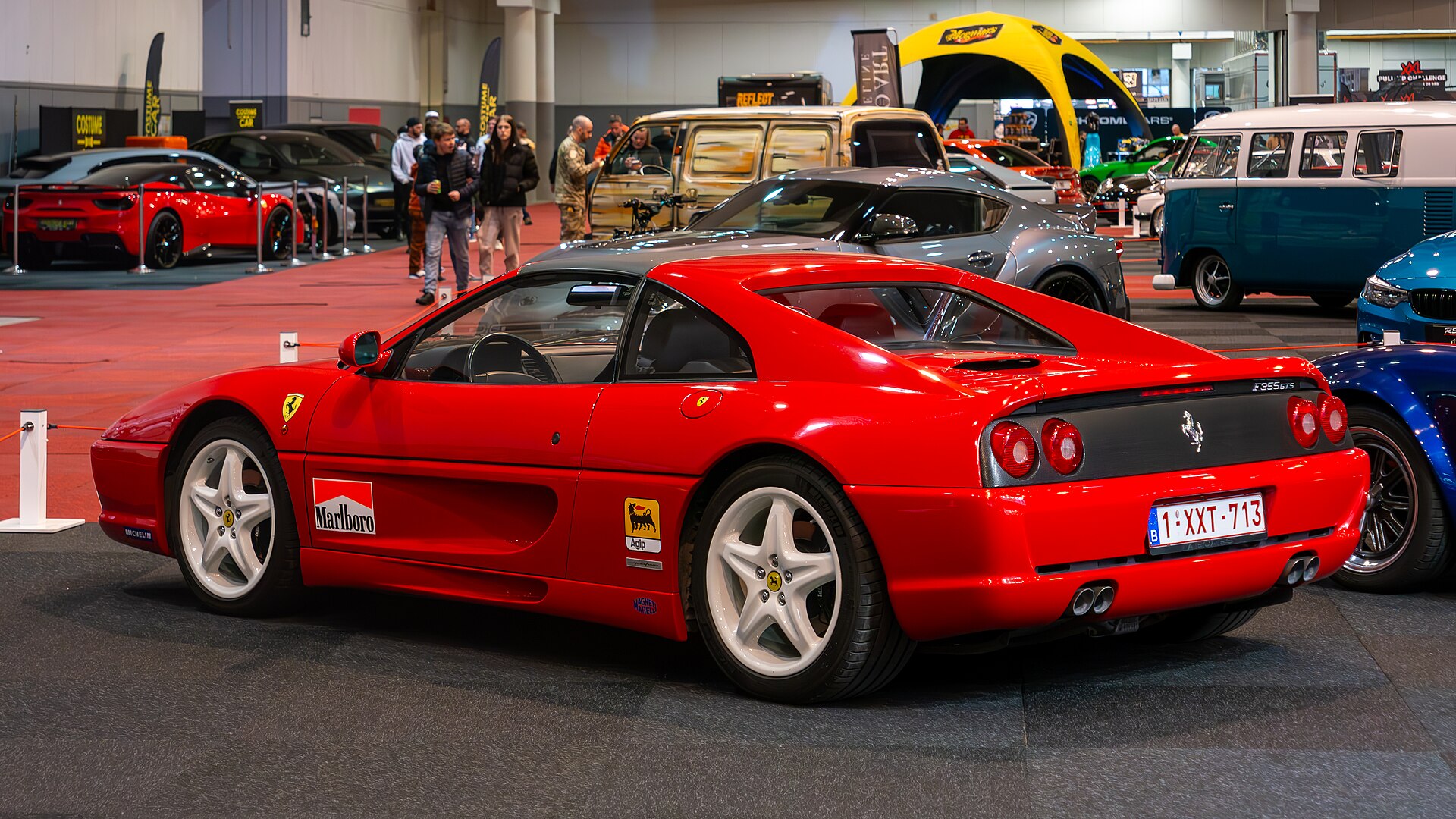
The F355 refined the 348 formula with a five-valve-per-cylinder V8 and was offered as Berlinetta, GTS and Spider. It was also the first Ferrari road car offered with the F1 paddle-shift gearbox, which makes the gearbox choice one of the main variables in its valuation.
The 456
The 456 is a front-engine V12 2+2, and it was offered with a gated manual or, as the 456 GTA, an automatic. The revised 456M followed in 1998. Accordingly, valuing a 456 means separating the GT from the GTA and early cars from M cars before any comparison is meaningful.
The 550 Maranello
The 550 Maranello marked Ferrari's return to a front-engine V12 two-seater, and every example left the factory with a six-speed manual. Its Pininfarina-built Barchetta derivative is a separate, lower-volume car and should never be used as a comp for the coupé.
The Three Inputs Behind A Defensible Figure
A credible valuation rests on three inputs, each covering for the weaknesses of the others. Here's how each one fits into the overall picture:
Verified Auction And Dealer Results
Public auction results from houses such as RM Sotheby's, Gooding & Company, Bonhams and Mecum, along with online platforms that publish final sale prices, form the factual backbone of any valuation. What's more, each result comes with a lot description, photographs and often a service history, so you can judge how comparable it really is.
The rule we apply is simple: if a sale cannot be linked to a lot record, it does not enter the comp set. Unsold cars, high bids that did not meet reserve and anecdotal private sales are context at best.
Hagerty Valuation Tools
Hagerty publishes values for collector cars across a four-tier condition scale, drawing on auction results, private sales and insurance data. Its figures are useful because they are graded and updated regularly, which gives you a reference range rather than a single anecdote.
That said, a guide value describes a typical car in a given condition. It cannot see a specific car's records, paint history or recent belt service, so it serves as a cross-check and never replaces the comps.
Condition Grades
Condition is where most valuation disputes actually live. A #2 Excellent car and a #3 Good car of the same model can sit in noticeably different bands, so grading the car honestly matters more than finding one more comp.
For these cars, a disciplined grade covers the following, including but not limited to:
- Paint and body. Original paint, documented respray or accident repair, verified with a paint-depth gauge during inspection.
- Interior. Leather condition, sticky switchgear and dash materials, which are a known ageing issue on cars of this period.
- Mechanical state. Compression and leak-down results, clutch wear and the date and mileage of the last major service.
- Originality. Factory wheels, exhaust and interior trim versus aftermarket parts, along with whether the originals come with the car.
All of these feed the grade, and the grade decides which band of Hagerty values and auction comps applies.
How The Inputs Combine Into One Number
Once the three inputs are gathered, they are reconciled in a consistent order. Here's the sequence we follow:
- Define the exact car. Model, revision, body style, gearbox, US or non-US specification, and colour combination.
- Build the comp set. Verified sales of that exact configuration from the past 12 to 24 months, each with a linked lot record.
- Grade the subject car. Assign a Hagerty-style condition tier based on a pre-purchase inspection (PPI), never on photographs alone.
- Place it in a range. Bracket the car between the comps it is better and worse than, then check the result against the matching Hagerty tier.
- Apply documented adjustments. Add or subtract for service records, mileage, ownership history and originality, and write down the reason for each adjustment.
The output should always be a range, never a single point. If the comps and the guide value disagree sharply, that gap is a signal to look harder at the comps rather than averaging the two sources.
Model-Specific Adjustments
Each of the four cars carries its own value drivers beyond general condition. Keep in mind that these adjustments often outweigh mileage.
Engine-Out Service On The 348 And F355
On the mid-engine V8 cars, the major cam-belt service traditionally requires removing the engine. As a result, the date of the last engine-out service is one of the largest single adjustments in a 348 or F355 valuation, and a car due for one should be priced with that cost accounted for. Our breakdown of Ferrari service costs by model covers how to budget for it.
The F355 also carries known model-specific inspection points, including exhaust manifolds and, on some cars, valve guides. A specialist PPI should address both directly, and the findings belong in the valuation file.
Gearbox On The F355 And 456
For the F355, the gated six-speed manual is generally the more sought-after configuration among collectors, and comps should be drawn from the same gearbox type only. Mixing manual and F1 sales in one comp set will distort the range in both directions.
The same discipline applies to the 456, where GT manual and GTA automatic cars should be compared separately. Both cars sit in the front-engine V12 segment we examine in our analysis of the grand-tourer value floor.
Originality And Specification On The 550
Because every 550 Maranello is a manual, specification and condition carry more of the valuation weight. Factory options, colour combination and a complete, original interior all move a car within its band.
Documentation Is Part Of The Value
On a car of this age, the file is part of the asset. Original books, the tool kit, window sticker, service invoices and ownership chain all support the upper end of a range, while gaps in the record should pull it down.
What's more, every car in this group is now old enough for Ferrari Classiche certification, which documents that major components match factory records. Classiche certification does not set a price, but it removes a layer of uncertainty that buyers otherwise discount for.
The agreed value you settle on also has uses beyond the purchase. It feeds the stated figure on an agreed-value policy, covered in our guide to supercar insurance, and it shapes what a specialist lender will advance, as discussed in our piece on exotic car financing.
Common Valuation Mistakes
Most overpayments trace back to a handful of avoidable errors. Be aware of the following:
- Comping across configurations. Using a Spider sale to value a Berlinetta, or a GTA to value a 456 GT manual.
- Treating asking prices as sales. Dealer listings show what sellers hope for and say nothing about what buyers have paid.
- Grading from photographs. A car that looks #2 online can grade #3 once the inspector measures paint and reads the service history.
- Ignoring service due. A low price on a car due for engine-out service is often fair value rather than a discount.
Overall, each of these errors comes from skipping a step in the method above.
Editorial Recommendation
For buyers working through this decade of Ferrari, the following approach gives the most defensible result:
- F355 Berlinetta or GTS, gated manual. Comp only against manual sales, and require a documented engine-out service before closing.
- 348, late GTB or GTS. Prioritise service history over mileage, and price any service that is due into the offer.
- 456 GT manual or 456M. Compare separately from GTA automatics, and treat a complete records file as a requirement.
- 550 Maranello. Focus on originality, factory specification and interior condition, and keep the Barchetta out of the comp set entirely.
If you are weighing one of these cars against a newer mid-engine model, our used Ferrari 458 guide and the wider Ferrari marque hub offer useful points of comparison. In every case, a written valuation built on verified comps, an honest grade and a full file is the figure worth defending.
Frequently asked questions
Should an F355 F1 and a manual F355 be valued against the same comps?
No. The gated six-speed manual is generally the more sought-after F355 configuration, so manual and F1 cars should each be compared only against verified sales with the same gearbox.
How should the 456 GTA be valued against the 456 GT?
Treat them as separate cars. The GTA is the automatic version, and the 456M revision followed in 1998, so build each comp set from the same gearbox and revision before applying condition adjustments.
Can a 550 Barchetta sale be used to value a 550 Maranello coupé?
No. The Barchetta is a separate, lower-volume Pininfarina derivative with its own market. Value a 550 Maranello only against verified coupé sales of similar condition and specification.
Does Ferrari Classiche certification raise a 1990s Ferrari's value?
It does not set a price, but it confirms that major components match factory records. That removes uncertainty buyers would otherwise discount for, which supports the upper end of a car's range.
How recent should auction comps be for a 348 or F355 valuation?
A 12-to-24-month window of completed sales with linked lot records is a sound working range. Older results can show a trend, but they should not anchor the figure in a market that has moved.