The Bugatti Veyron on the Collector Market: How 16.4 Coupé, Grand Sport and Super Sport Values Have Separated
Few
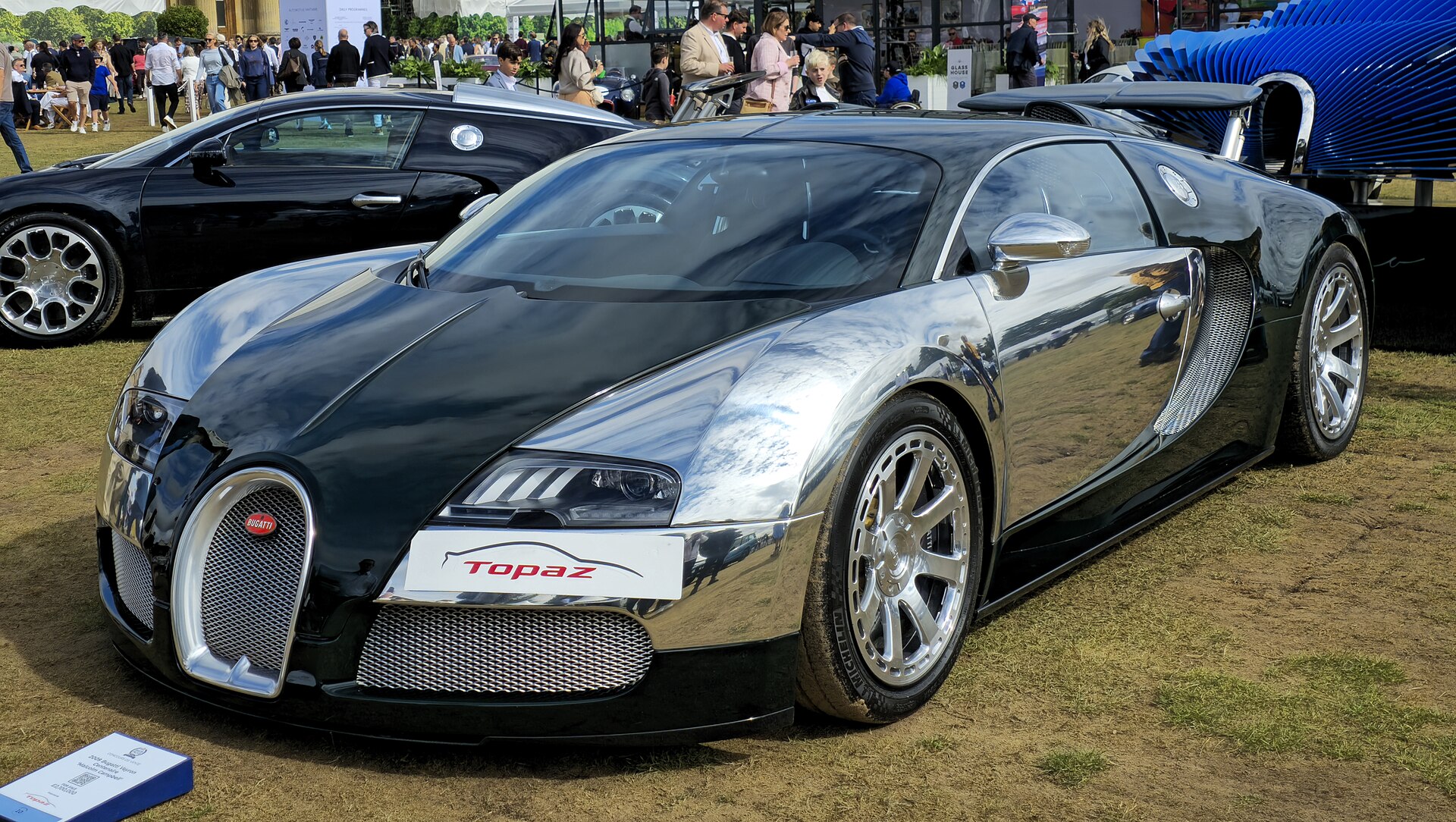
automotive programs have been as thoroughly documented, debated and photographed as the Bugatti Veyron, and few have produced a used market as clearly stratified. When the first 16.4 coupés reached owners in 2005, the car's 8.0-liter, quad-turbocharged W16 and its 1,001 PS rating (per Bugatti) set the benchmark that defined the hypercar segment for the decade that followed.That said, a collector buying a Veyron in 2026 is not buying a single car. Bugatti's own production history puts the total at 450 examples — 300 coupés and 150 open cars — and within that run, the 16.4 Coupé, the Grand Sport, the Grand Sport Vitesse and the Super Sport now trade on noticeably different curves.
This is a heritage and collector read for buyers weighing a Veyron against the rest of the hypercar category. Every value range below is marked as an editorial estimate; verify against current Hagerty Valuation Tools data and published auction lot records before you transact.
The Production Numbers Behind The Spread
Before any discussion of value, it helps to anchor on how many of each variant exist. The figures below draw on Bugatti's published production history and widely reported registry counts; production estimates vary slightly by source, so verify against authoritative records before a transaction.
The Veyron family breaks down as follows:
- 16.4 Coupé (introduced 2005). The original fixed-roof car, with 1,001 PS from the W16 and a verified top speed above 253 mph, per Bugatti. It accounts for the largest share of the 300 coupés built, which is why it now functions as the entry point to Veyron ownership.
- 16.4 Grand Sport (introduced 2009). A targa-style open car with a removable roof panel and the same 1,001 PS output as the coupé. It shares the 150-car open allocation with the Vitesse, and the split is commonly cited as roughly 58 Grand Sports to 92 Vitesses — treat both counts as estimated.
- 16.4 Super Sport (introduced 2010). Output rose to 1,200 PS, and in World Record Edition form the car reached 267.856 mph in 2010, per Bugatti and Guinness World Records. Commonly cited production is 30 cars, including five World Record Editions, with customer cars electronically limited to 258 mph.
- Grand Sport Vitesse (introduced 2012). The open body paired with the Super Sport's 1,200 PS drivetrain, which set an open-car speed record of 254.04 mph in 2013, per Bugatti. It is the most numerous of the 1,200 PS Veyrons, which keeps it priced between the Grand Sport and the Super Sport in most estimates.
All of these cars share the same basic architecture, carbon monocoque and seven-speed dual-clutch gearbox. What separates them on the collector market is the combination of output, body style and, above all, how few of each were built.
In addition, Bugatti issued a long list of special and one-off editions across the run, including the Pur Sang, the Fbg par Hermès and the Les Légendes de Bugatti series. Each of these trades on its own provenance, and none should be priced off a standard-car comparison.
How Each Variant Has Moved
The table below summarizes where each variant sits today. Keep in mind that the value column is an editorial estimate for clean, documented, US-delivered examples, not a quote, and that individual cars can fall well outside these ranges on condition and history alone.
| Variant | Output (per Bugatti) | Commonly cited production | Estimated US market range | |---|---|---|---| | 16.4 Coupé | 1,001 PS | Majority of 300 coupés | $1.3M–$2.0M (estimated) | | 16.4 Grand Sport | 1,001 PS | ~58 (estimated) | $1.5M–$2.3M (estimated) | | Grand Sport Vitesse | 1,200 PS | ~92 (estimated) | $2.0M–$3.0M (estimated) | | 16.4 Super Sport | 1,200 PS | ~30, incl. 5 WRE (estimated) | $3.0M–$4.5M+ (estimated) |
The pattern is consistent across sources: the more power and the fewer cars, the steeper the curve. Accordingly, the gap between the cheapest and most expensive standard Veyrons is now wider than the gap between a Veyron Coupé and many contemporary hypercars.
The 16.4 Coupé: The Entry Point
The original coupé spent much of its first decade on a conventional supercar curve, trading below its launch price as early cars aged and running costs became widely known. Its trajectory changed once the Chiron arrived in 2016 and buyers began treating the Veyron as a finished chapter rather than the outgoing model.
Today, the 16.4 Coupé is the most liquid Veyron, and that cuts both ways. Supply is deep enough that condition, mileage profile and service history set the price far more than the badge does, and an early car with gaps in its records can sit well below a documented, low-mileage example.
The Grand Sport: Open Body, Moderate Premium
The Grand Sport carries an estimated premium over a comparable coupé, driven by its smaller production share and the appeal of an open W16. However, it shares the coupé's 1,001 PS drivetrain, and that has capped its premium relative to the later Vitesse.
For a buyer who wants open-air Veyron ownership without stepping into 1,200 PS pricing, the Grand Sport is the logical target. Remember that roof-panel condition, seal wear and the presence of the original storage provisions all deserve attention during inspection.
The Grand Sport Vitesse: The Open Car Collectors Target
The Vitesse combines the open body with the full 1,200 PS specification and a speed record of its own. As a result, it has held estimated values above the Grand Sport and, for many collectors, it represents the most complete expression of the open Veyron.
What's more, the Vitesse is the newest of the standard cars, with deliveries running into 2015. That later build window often means lower mileage and more recent factory service, both of which support pricing.
The Super Sport: A Separate Market
The Super Sport trades less like a Veyron variant and more like a blue-chip limited series. Its 1,200 PS output, its 2010 record and a production run commonly cited at 30 cars give it the documented-scarcity profile that has carried the Porsche Carrera GT and the Lexus LFA into investment territory, at a far smaller production scale.
Keep in mind that the five World Record Edition cars sit at the very top of the range and rarely surface publicly. For these, and for any Super Sport, pricing should be built from lot-level auction records rather than from general market commentary.
What Drives Price Within A Variant
Once the variant is chosen, the spread between individual cars is still substantial. The factors that move an individual Veyron's value include but are not limited to:
- Service history. A continuous record at an authorized Bugatti service point is the single strongest support for value. Gaps in that record invite a discount that often exceeds the cost of the missing work.
- Fuel-bladder replacement. The Veyron's fuel bladders carry a factory replacement interval widely reported at about ten years. A car with this work documented removes a major cost question for the next owner.
- Tires and wheels. The Veyron runs a model-specific Michelin tire and wheel package, and replacement is a significant, scheduled expense. Current tires and documented wheel inspections are a meaningful plus at sale.
- Mileage profile. Very low mileage helps, but a car that has sat for years without exercise can carry deferred issues of its own. Consistent, modest use with matching service entries is often the healthier profile.
- Specification and color. Two-tone exterior combinations, exposed carbon and desirable interior specifications can lift a car within its variant. Conversely, a polarizing specification can lengthen time-on-market.
- Ownership chain. Single-ownership cars and those with complete books, keys and factory documentation trade at the top of their range. A clean US title history matters as much as the mechanical file.
All of the above adds up to a simple rule: within any Veyron variant, the documentation file is worth reading before the odometer. This is why condition tier and records often explain more of the price spread than model year does.
Running Costs And Their Effect On Value
Veyron ownership carries service obligations that are well above those of a conventional exotic, and the market prices that in. Annual servicing, scheduled tire and wheel work and the fuel-bladder interval together represent an estimated outlay that buyers should confirm directly with an authorized Bugatti service point before purchase.
In fact, the most expensive Veyron to own is often the cheapest one to buy, because a low asking price frequently reflects deferred maintenance. For a fuller picture of how factory programs structure these costs, see our coverage of hypercar ownership programmes, and price cover early through our guide to supercar insurance.
Buying A Veyron In The US
The Veyron was US-certified and sold new through Bugatti's American dealer network. Accordingly, buyers should favor US-delivered cars with continuous records over imports, which can complicate title, emissions compliance and service history.
Bugatti's dealer network also offers factory certified pre-owned examples, and the terms are worth comparing against independent sales. Our guide to CPO exotic warranty coverage explains what certification typically does and does not include.
Regardless of the sales channel, a pre-purchase inspection by a Bugatti-trained technician is non-negotiable at this level. Note that structuring a seven-figure purchase also deserves early planning, and our overview of exotic car financing covers how lenders approach collector-grade hypercars.
Editorial Recommendation
The Marque Editors' view is that each Veyron variant suits a different collector, and that documentation should drive the final choice. Our recommendations by buyer profile are as follows:
- First Bugatti, driving-focused. A US-delivered 16.4 Coupé with a complete authorized service file, current tires and documented fuel-bladder work. Prioritize records over the lowest mileage you can find.
- Open-car collector. A Grand Sport Vitesse over a Grand Sport, for the 1,200 PS drivetrain and the stronger collector following. Inspect roof-panel fit and seals carefully.
- Blue-chip, long-hold collector. A Super Sport with a clear ownership chain and lot-level auction comparables. Treat World Record Editions and special editions as individual assets, priced only against their own records.
Overall, the Veyron has moved from used hypercar to collector car, but not uniformly. The buyer who understands which curve each variant sits on is the buyer who pays the right price.
Explore Bugatti On Marque
The Veyron is the foundation of the modern Bugatti story, and its values set the context for everything that followed. For the full marque history, model lineup and buying guidance, visit our Bugatti marque hub, or compare the Veyron against its peers in our hypercar coverage.
Frequently asked questions
How many Bugatti Veyrons were built in total?
Bugatti's figures put total Veyron production at 450 cars: 300 coupés, including the Super Sport, and 150 open cars split between the Grand Sport and the Grand Sport Vitesse. Verify individual variant counts against registry data.
How fast is the Bugatti Veyron Super Sport?
In World Record Edition form it reached 267.856 mph in 2010, per Bugatti and Guinness World Records. Customer Super Sports were electronically limited to 258 mph.
Were Bugatti Veyrons sold new in the United States?
Yes. The Veyron was US-certified and sold through Bugatti's American dealer network, so buyers should favor US-delivered cars with continuous records over imports, which can complicate title and service history.
What is the Veyron fuel-bladder service?
The Veyron's fuel bladders carry a factory replacement interval widely reported at about ten years. A car with this work documented at an authorized Bugatti service point removes a major cost question for the next owner.
Which special-edition Veyrons exist?
Bugatti built numerous special and one-off Veyrons, including the Pur Sang, the Fbg par Hermès and the Les Légendes de Bugatti series. Each trades on its own provenance and needs lot-level auction comparison.